Products & Formulation
Do You Actually Need 30% Kava Powder?
12 min read
Read
A formulator’s guide to choosing between traditional root powder, concentrated CO₂ extract, and water-soluble nano powder
If you’re formulating a supplement, beverage, or functional food with kava, one of the first product decisions you’ll face is format: traditional kava powder, kava oleoresin extract, or nano kava powder? All three start from the same noble root and deliver the same six kavalactones, but they behave very differently in a finished product. This guide walks through when each format is the right call — with the dosing maths, cost considerations, and application trade-offs that formulators need.
This guide covers the three dry-side kava formats — root powder, oleoresin paste, and nano powder. If you're comparing the two liquid-compatible nano formats specifically, our Nano Kava Powder vs. Nano Kava Liquid guide walks through the dry vs. wet decision.
Kava powder, kava oleoresin, and nano kava powder all originate from the dried root of the noble kava plant (Piper methysticum). The difference is how far through the processing chain the material has travelled before it reaches your formulation.
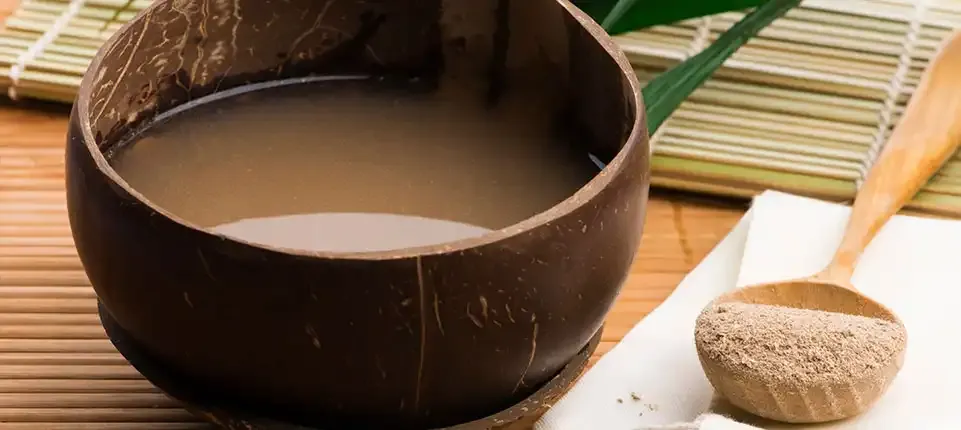
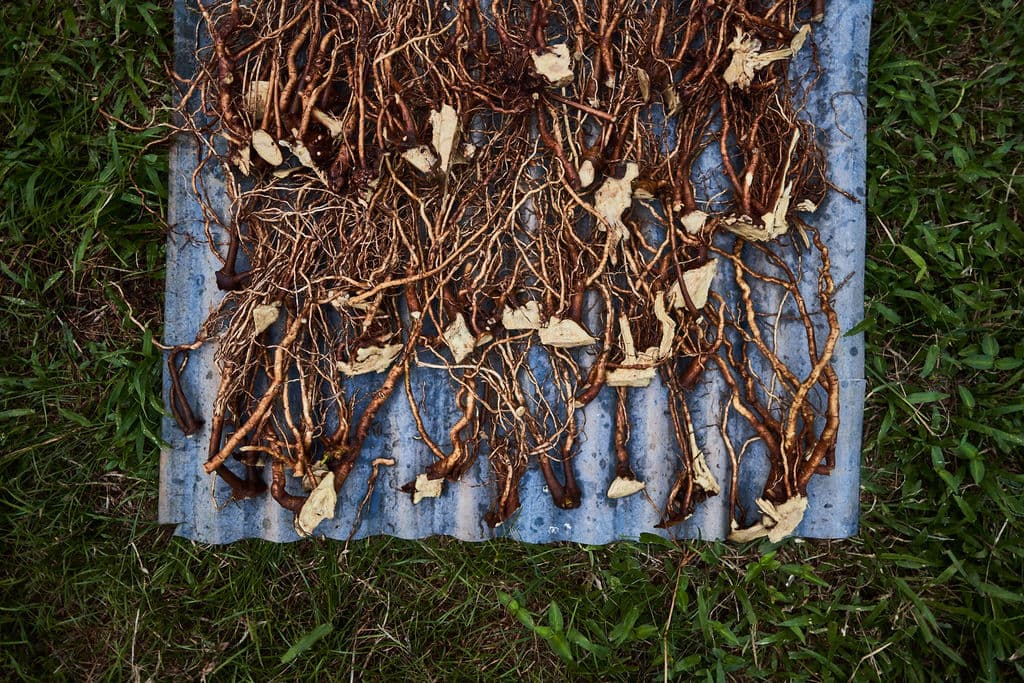
Kava powder is the raw material: noble kava roots, dried and milled to a specified particle size. At Kavain, we supply two powder grades — traditional grind (whole root powder, 5–8% kavalactones from Fijian cultivars and 6–10% from Vanuatuan) for authentic preparation, and instant kava powder (water-soluble, fine-milled at 6–10% kavalactones) for water-based RTD beverages and modern drink formats.
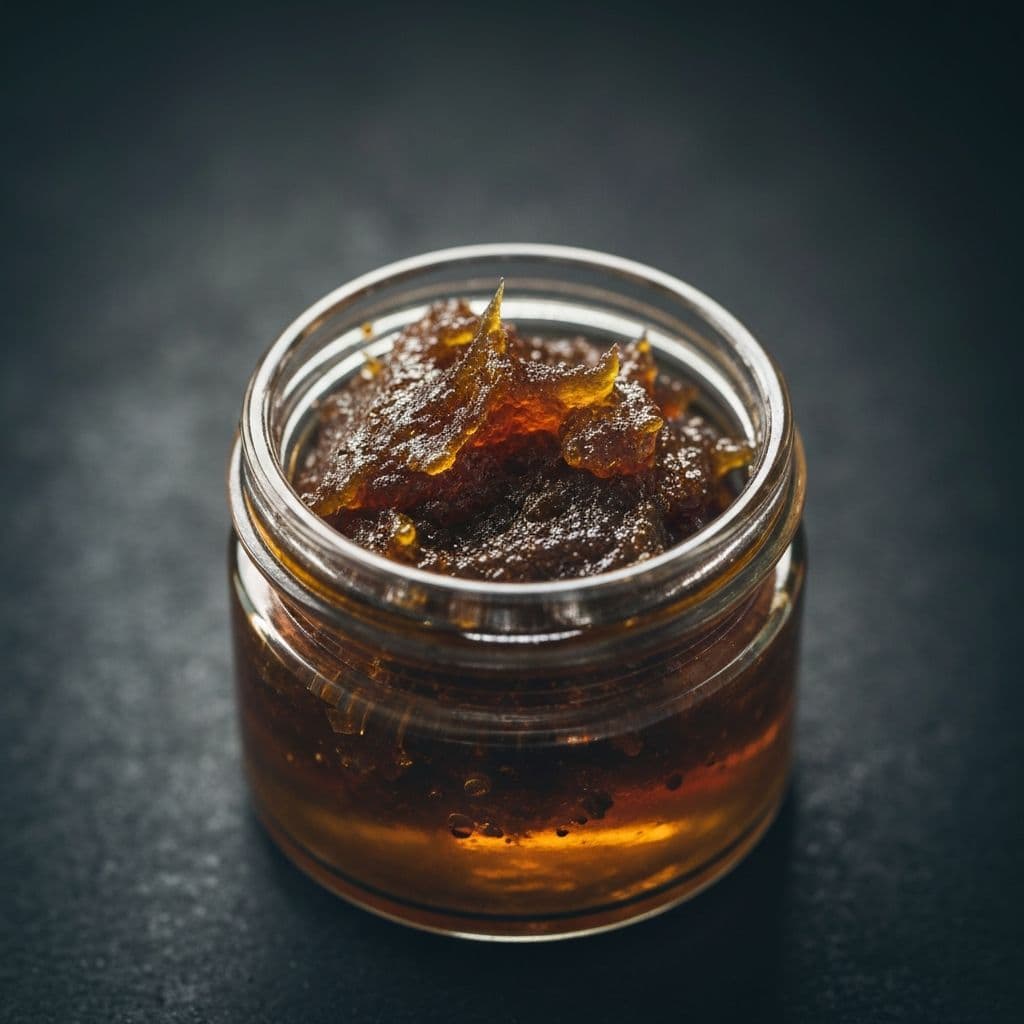
Kava oleoresin is what you get when that same dried root undergoes supercritical CO2 extraction. The extraction concentrates the kavalactones from around 8% in the raw root to 70%, 75%, or 80% in a golden amber paste. The non-active plant matter — fibre, starch, water, residual pigments — is left behind. What remains is a dense concentrate of the compounds formulators (and consumers!) want.
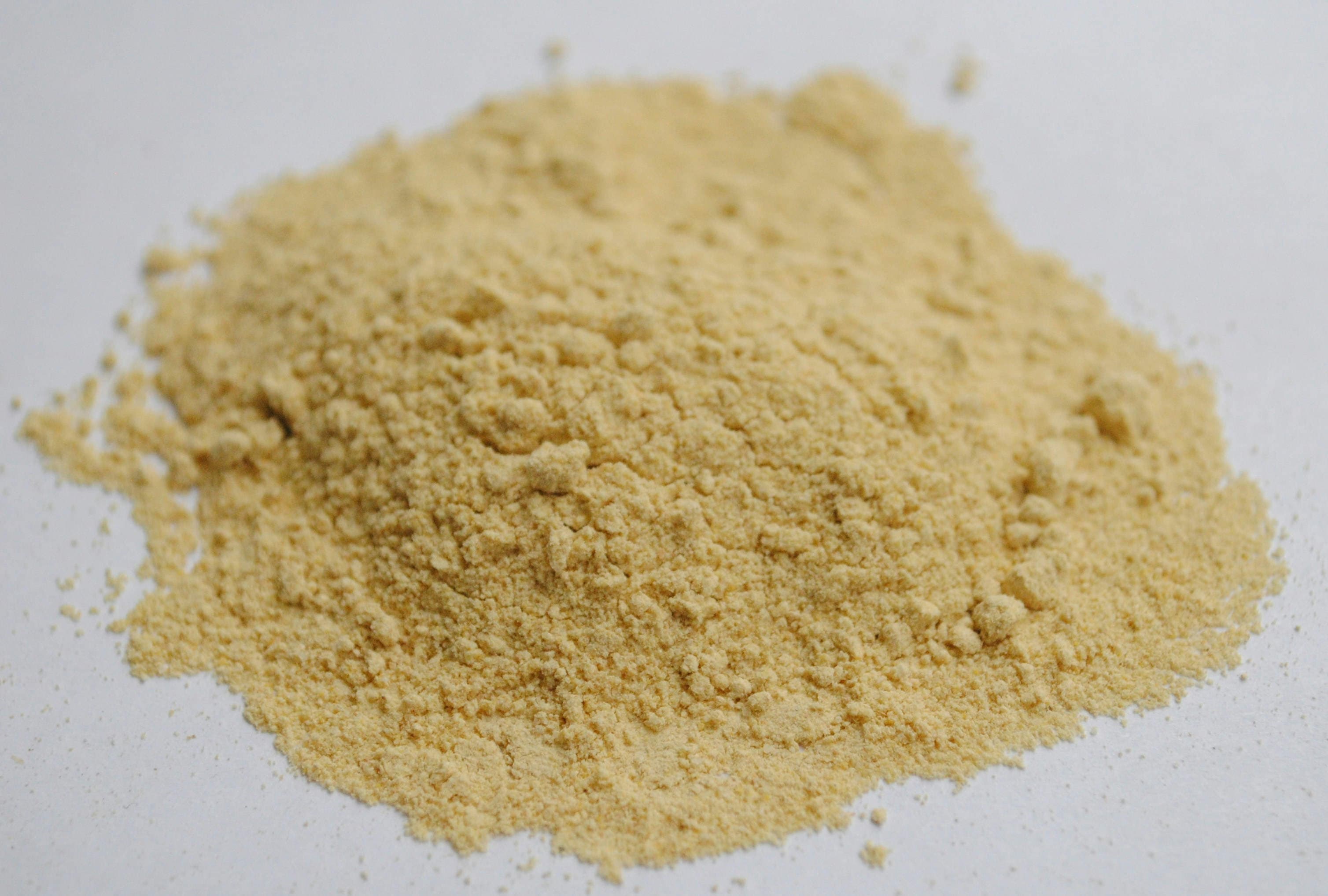
Nano kava powder is a hybrid of the two formats above and a newer addition to the range. The starting input is Kavain's Vanuatu oleoresin; from there, a cGMP-compliant US partner processes it through nano-emulsification and spray-dries it onto a food-grade carrier matrix (modified tapioca and corn starch, sunflower-derived phosphatides, fractionated coconut oil). The end product is a free-flowing fine powder loaded at up to 20% kavalactones that disperses cleanly into water — combining the dose-precision of an extract with the water-solubility of a powder format.
Functionally, the choice is raw material vs concentrated extract vs water-soluble extract powder — and the right answer depends on what you’re building.
The potency gap is the starting point for any formulation decision. Per gram of material:
| Format | Kavalactone Content | Relative Potency |
|---|---|---|
| Traditional Grind | 5–10% | 1× (baseline) |
| Instant Powder | 6–10% | 1–1.3× |
| Nano Kava Powder | up to 20% | ~3× |
| Oleoresin 70% | 70% | ~10× |
| Oleoresin 75% | 75% | ~11× |
| Oleoresin 80% | 80% | ~13× |
Oleoresin delivers 10–13 times more kavalactone per gram of material than raw powder. Nano powder sits in between: a 3× uplift over root powder while remaining a dry, water-soluble powder format. That spectrum is why all three formats exist — each occupies a different point in the trade-off between concentration, solubility, and finished-product fit.
To make the maths concrete, suppose you’re formulating a capsule that targets 100 mg of kavalactones per dose. Here’s how much material each format requires per capsule:
| Format | Material per capsule | Practical capsule size |
|---|---|---|
| Traditional Grind (8% kavalactones) | 1,250 mg | Impractical — exceeds size 00 |
| Instant Powder (9% kavalactones) | 1,111 mg | Impractical — exceeds size 00 |
| Nano Powder (20% kavalactones) | 500 mg | Fits in size 0 |
| Oleoresin 70% | 143 mg | Fits comfortably in size 1 |
| Oleoresin 75% | 133 mg | Fits comfortably in size 1 |
| Oleoresin 80% | 125 mg | Fits in smaller capsules |
A size 00 capsule holds around 735 mg of powder. Delivering 100 mg of kavalactones from raw powder simply doesn’t fit. This is why raw kava powder rarely appears in capsule supplements above token dosing — the geometry doesn’t work. Nano powder fits the geometry of standard capsules but at larger fill volumes than oleoresin; the trade-off it offers is water-solubility, which oleoresin doesn’t have on its own.
The same maths apply to kava shots. A 60 ml shot targeting 100 mg of kavalactones needs either 1.25 g of traditional grind dispersed in 60 ml (gritty, insoluble residue) or 133 mg of oleoresin 75% (dissolved into a solubiliser, no grit). The oleoresin version is what buyers are drinking when they buy premium kava shots.
Powder formats still have defined places where they’re the right choice:
Traditional kava bars and ceremonial preparation. The full-root character — the earthy-peppery flavour, the colour, the traditional mouthfeel — is part of the product experience. An oleoresin would deliver the same compounds but miss the cultural and sensory context.
Traditional-style water-based RTD beverages. Our instant kava powder is water-soluble and fine-milled specifically for water-based, nectar-style kava drinks — the format used in regulatory-restricted markets like Australia, where RTDs must be water-based and free of added flavouring. For modern flavoured functional beverages and kava shots, oleoresin is the better format (see below).
Products where cost per kilo matters more than kavalactones per gram. For large-volume drinks where kava is a supporting ingredient rather than the primary active, raw powder is the economical choice.
Authentic positioning. “Whole root kava powder” resonates with consumers who value less-processed, closer-to-traditional products. Marketing claims around minimal processing and traditional preparation favour powder.
Nano kava powder is the right call when a formulation needs the dose-precision of an extract and the water-solubility of a powder — a combination neither raw powder nor paste oleoresin delivers on it's own:
Single-serve sachets and stick-packs. End consumers add water and the powder disperses without kneading, straining, or visible sediment. A 500 mg fill at 20% loading delivers 100 mg kavalactones in one sachet, which is hard to achieve with raw instant powder (1 g+ fills, hazier dispersion).
Effervescent and instant beverage formats. Tablet-form kava drinks, drop-in fizzy mixes, instant kava lattes — the powder integrates into dry mixes and disperses on rehydration without the solubiliser system that paste oleoresin needs.
RTD beverages where flavour neutrality matters. Where instant powder brings the earthy-peppery character of root, nano powder sits on the cleaner end of the flavour spectrum. Useful for flavoured functional beverages where kava is a functional ingredient rather than a featured taste note.
Capsules and tablets that need water-compatible coatings. Aqueous coating processes (enteric coatings, taste-masking coatings, immediate-release film coatings) are easier to apply to a water-soluble powder fill than to a paste oleoresin.
Edibles where dose precision and dry handling both matter. Powder format integrates into low-moisture matrices — chocolates, chews, lozenges — without the viscosity challenges of working with a paste oleoresin in confectionery production.
Kava oleoresin becomes the clear choice when any of the following apply:
Capsules and softgels. Anywhere the finished product has to fit a standard capsule size, oleoresin is usually the only practical option.
Dose standardisation. Every kilogram of oleoresin has a documented, HPLC-verified kavalactone percentage. Every capsule or softgel hits the same dose. Raw powder varies batch to batch — traditional grind at 7.2% one run and 8.1% the next can mean formulators either accept dose drift or recalibrate every batch.
Gummies, chocolate, and edibles. Taste and colour control matter. Oleoresin integrates into a gummy base or chocolate formulation without dominating flavour or appearance. Powder brings the earthy kava character with it.
Kava shots and concentrated liquids. Higher kavalactone loading in a smaller liquid volume, cleaner integration with solubilisers, and no gritty sediment.
Nutraceutical blends with multiple actives. When kava is one of five or ten ingredients in a capsule, fill volume becomes critical. Oleoresin lets the formulator hit target kavalactone doses without crowding out the other actives.
Pharmaceutical-grade or research applications. Standardisation, per-batch HPLC profiling, and the ability to specify exact kavalactone content per gram all matter more here than raw material authenticity.
Raw powder looks cheaper on a per-kilogram basis, and oleoresin looks expensive. But the meaningful cost comparison is dollars per milligram of kavalactone delivered — which is what a dose-standardised product is actually paying for.
| Format | Price per kg (indicative) | Kavalactones per kg | Cost per mg of kavalactone |
|---|---|---|---|
| Traditional Grind | ~$100 | ~70 g (at 7%) | ~$0.0014 |
| Oleoresin 70% | ~$1,370 | 700 g | ~$0.0020 |
| Oleoresin 75% | ~$1,470 | 750 g | ~$0.0020 |
| Oleoresin 80% | ~$1,600 | 800 g | ~$0.0020 |
| Nano Kava Powder 20% | ~$1,600 | 200 g | ~$0.0080 |
On a cost-per-kavalactone basis, oleoresin is roughly 40% more expensive than traditional grind. That premium pays for the extraction step, the standardisation, and the ability to use smaller capsules, softer gummies, or cleaner shot formulations. For large-volume beverage applications where the extra kavalactones don’t matter and you’re happy to disperse a gram of powder into each serving, the cheaper powder wins. For dose-standardised products where every milligram counts, the 40% premium is usually absorbed (and sometimes offset) by smaller capsule sizes, tighter fill tolerances, and lower per-unit excipient costs.
Nano kava powder sits at the highest cost-per-kavalactone of the three formats — roughly 4× oleoresin on a per-mg basis. The premium pays for the nano-emulsification step, the cGMP partner manufacturing, and the water-solubility of the finished powder. For an instant sachet or effervescent format where dispersion is non-negotiable and the consumer experience can’t involve a solubiliser system, that 4× per-mg cost is the price of admission for the format. For products where solubility doesn’t matter, oleoresin remains the more cost-effective choice.
The right cost comparison is always “what does a finished dose of my product cost?” — not “what does a kilo of ingredient cost?”
Three practical handling differences come up regularly in procurement conversations:
Shelf life. Oleoresin has an extended shelf life, substantially longer than dried powder. The low moisture content and high kavalactone concentration make the paste self-preserving. Dried powder shelf life is typically documented per batch.
Solubility. Traditional grind is partially dispersible in water (the kavalactones disperse; the fibrous material stays suspended, then settles). Instant powder is water-soluble by design. Nano powder is engineered for clean water dispersion straight from the dry powder — the carrier matrix and lipid emulsifier system handle solubilisation, no formulation work required. Oleoresin isn’t directly water-soluble but integrates readily into appropriate solubilisers — medium-chain triglycerides, ethanol, polysorbates, or emulsifiers depending on the product — which is how it ends up in beverages, shots, and softgels.
Storage. Powder is stored at standard warehouse conditions. Oleoresin keeps best in airtight containers below 25°C (77°F), away from direct sunlight. Both formats are packaged in food-grade moisture-barrier packaging for international transit.
Whatever format you choose, the quality assurance is identical. Every Kavain batch — powder, oleoresin, or nano-emulsified — is HPLC-profiled for all six kavalactones, tested for heavy metals (lead, arsenic, cadmium, mercury), screened for microbial contamination, and analysed for pesticide residues. An internal Certificate of Analysis is issued on every batch and available on request. Kavain’s internal testing methodology was developed in partnership with our ISO/IEC 17025-accredited US lab partners, so the internal CoA covers the same scope and methods as an independent one. Independent third-party CoAs against the same batch sample are arranged on request when buyers require an independently-signed CoA.
All formats start from noble kava cultivars sourced from Fiji and Vanuatu, confirmed by cultivar identity alongside chemotype and flavokavain analysis. We never source or supply tudei (non-noble) material, regardless of format.
For a deeper explanation of chemotype codes and what to look for on a CoA, see our guide on reading a kava chemotype.
A quick-reference for which format suits which product:
| If your product is… | Recommended format |
|---|---|
| A traditional kava beverage or kava bar | Traditional Grind |
| A traditional-style water-based kava RTD (e.g. Australia-compliant) | Instant Powder |
| A single-serve sachet or stick-pack consumers add water to | Nano Kava Powder |
| An effervescent or instant beverage tablet | Nano Kava Powder |
| A flavoured functional beverage where kava taste shouldn’t dominate | Nano Kava Powder |
| A capsule, softgel, or nutraceutical blend | Oleoresin (any %) |
| A gummy, chocolate, or edible | Oleoresin (any %) or Nano Powder |
| A premium kava shot or concentrated liquid | Oleoresin 75% or 80% |
| A volume supplement where cost matters | Oleoresin 70% |
| Pharmaceutical-grade or research application | Oleoresin 75% or 80% |
| A functional food with kava as one of several ingredients | Oleoresin (any %) |
| Marketed on authenticity or minimal processing | Powder |
Kava powder, kava oleoresin, and nano kava powder aren’t competing products — they’re complementary formats that serve different kinds of finished goods.
Powder stays dominant wherever whole-root character, traditional preparation, or straightforward cost-per-kilo economics define the product. Oleoresin stays dominant wherever fill volume, dose standardisation, multi-ingredient formulation, or premium positioning define the product. Nano powder stays dominant wherever water-solubility from a dry powder is the non-negotiable — sachets, stick-packs, effervescent mixes, flavoured RTDs — and the higher per-dose cost is justified by the consumer-experience advantage.
Kavain supplies noble kava in instant powder, traditional grind (Fiji and Vanuatu origins), and oleoresin at 70%, 75% and 80% kavalactones — manufactured in our vertically integrated Pacific Island operations. Nano kava powder is also distributed by Kavain, manufactured by our cGMP-compliant US partner from Kavain's Vanuatu oleoresin. Every Kavain-manufactured batch is HPLC-verified for chemotype and kavalactone content; Certificates of Analysis are available on request for any batch. Request a sample →
Sources and further reading:
Continue exploring kava industry insights
Experience the Kavain difference. Request a sample today and discover why leading formulators trust us for their kava supply.